


Pirates in Cabo San Lucas and the Manila galleon: what really happened at the cape
Why the Manila galleons passed Cabo San Lucas, how Cavendish and Rogers captured two of them, and which pirate stories are only legend.
In this guide
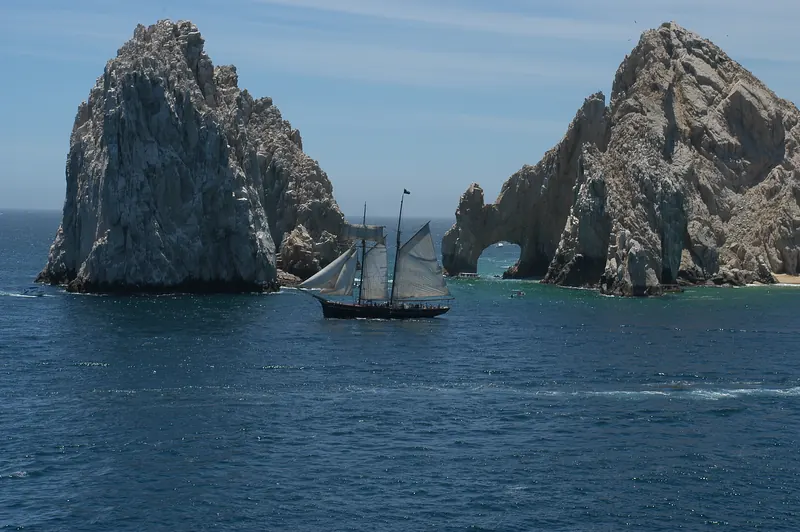
Yes, Cabo San Lucas had pirates, and the best-documented case has a date. In November 1587 the English privateer Thomas Cavendish waited at the cape with two small ships, captured the Manila galleon Santa Ana after a fight of several hours, and burned her. A second galleon was taken off the same cape at the end of 1709.
The rest of the pirate lore in Cabo, including the buried treasure, is legend.
Cabo pirates on a timeline
| Year | Event | Status |
|---|---|---|
| 1565 | Andrés de Urdaneta finds the return route from the Philippines; the galleon trade begins | Documented |
| 1587 | Thomas Cavendish captures and burns the Santa Ana off Cabo San Lucas | Documented |
| 1709 | Woodes Rogers captures the Encarnación y Desengaño off the cape | Documented |
| 1721 | George Shelvocke stops a week at the cape for water | Documented |
| 1730 | Jesuits found a mission at San José del Cabo, the galleons' watering place | Documented |
| 1815 | The last galleon reaches Manila; the trade ends | Documented |
| No date | Treasure from Cavendish's lost ship Content hidden near the cape | Legend |
What was the Manila galleon?
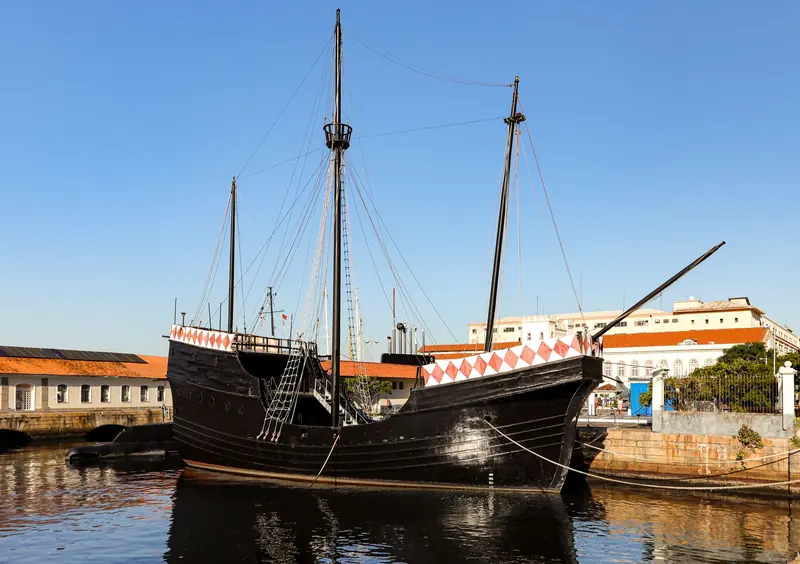
The Manila galleon was the Spanish ship that made a yearly round trip across the Pacific between Manila and Acapulco from 1565 to 1815. For 250 years it was the only regular link between Spain and its colony in the Philippines.
Eastbound, the cargo was mostly Chinese silk, along with porcelain, perfumes, Indian cotton and precious stones. Westbound, the ships carried Mexican silver. A single hull held a year of trade, which is why one captured galleon could make a privateer rich.
Why the Manila galleon trade route passed Cabo San Lucas
Sailing west from Acapulco was easy. The problem was getting back. In 1565 the navigator and friar Andrés de Urdaneta solved it by sailing north from the Philippines to about the 38th parallel, where the winds blow from the west. His ship reached the American coast after 129 days.
Every galleon after him followed the same loop. They crossed the North Pacific, sighted the coast of the Californias, and turned south with the land on their left. By the 1700s captains usually made landfall somewhere between Point Conception and Cabo San Lucas. Either way, the tip of the peninsula was the last corner before the run across to the mainland and Acapulco.
A crossing took about four months. Crews arrived weak from scurvy and low on water. The estuary at San José del Cabo, which the sailors called Aguada Segura, was a place to fill casks. Anyone who wanted to catch a galleon knew where and roughly when to stand watch.
Thomas Cavendish and the Santa Ana, 1587
Cavendish left Plymouth on July 21, 1586, to repeat Francis Drake's voyage around the world. By the autumn of 1587 he had two ships left: the Desire, of 120 tons, and the Content. Sources give the Content as 60 or 80 tons.
A pilot from a Spanish ship he had captured told him a galleon was expected in October or November and would pass Cape San Lucas. He sailed there and waited. A lookout sighted the Santa Ana early on November 4, 1587, by the calendar the English were using. Spain had already switched to the Gregorian calendar, which makes it November 14 in Spanish reckoning. One Baja historian gives October 24, so even the day is not settled.
The galleon was far bigger, about 600 tons, with more than 200 people aboard. She was also unarmed in any useful sense: her guns had been left behind to make room for cargo. The Spanish fought with small arms and whatever they could throw. Accounts describe a chase and then a fight of several hours, close to six in some retellings, with the English firing into the hull below the waterline until the captain surrendered.
What the English found:
- Gold worth about 122,000 pesos, roughly 100 troy pounds
- Silks, damasks, musk, spices and wine
- A cargo valued in total at around 2 million pesos
The two English ships could not carry it all. They took the best, and the rest stayed in the hold.
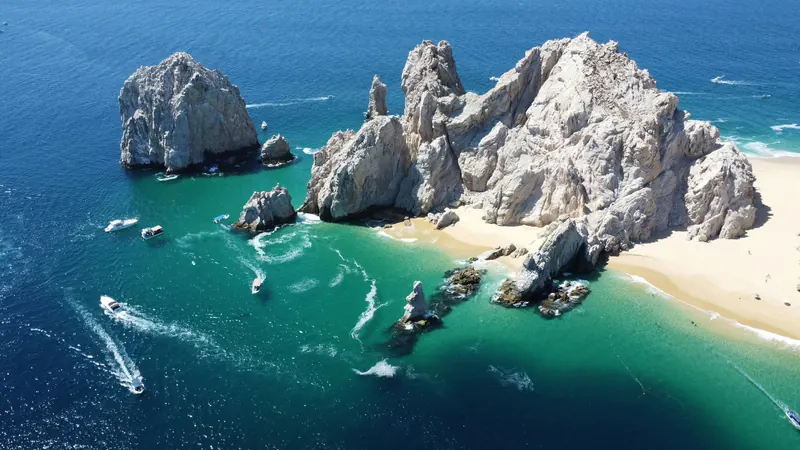
Cavendish brought the prize into a harbor the Spanish called Puerto Seguro. Historians identify it with either the bay of Cabo San Lucas or the anchorage at San José del Cabo, and the sources do not settle which. There he put about 190 people ashore with food, water, wine and some weapons. On November 17, the anniversary of Queen Elizabeth's accession, his crews celebrated, then set the Santa Ana on fire and left her drifting.
Among the people left on the beach was Sebastián Vizcaíno, who would return years later to chart the California coast. The castaways used what was left of the burned hull to get away, and they were in Acapulco by December 7.
Cavendish took a few people with him, including two young Japanese sailors known as Christopher and Cosmas and a Spanish pilot. The Desire reached Plymouth on September 9, 1588. The Content fell behind on the first night out from the cape and was never heard from again.
Woodes Rogers and the galleon of 1709
The second capture came 122 years later. Woodes Rogers, an English privateer captain, arrived at the cape in late 1709 with the Duke, the Duchess and a prize ship, the Marquis. His pilot was William Dampier. Also on board was Alexander Selkirk, the castaway Rogers had picked up earlier that year, whose story is one of the sources for Robinson Crusoe.
The galleon Nuestra Señora de la Encarnación y Desengaño came into view after weeks of waiting. Rogers's journal, which used the old English calendar, puts the fight on December 22, 1709. In the modern calendar that is the first days of January 1710. Twenty Spanish and nine English sailors died, by one count, and a musket ball tore through Rogers's jaw. An engraving of the capture is in the collection of the John Carter Brown Library.
A few days later a larger galleon, the Nuestra Señora de Begoña, appeared. She was well armed, with a crew of about 450. The English attacked and were beaten off.
Who else stopped at the cape?
George Shelvocke, another English privateer, anchored for about a week in August 1721 to take on water before crossing to China. His book, published in London in 1726, includes two engravings of the Pericú, the people of the cape. They are the oldest known drawings of them. More on them in the Pericú people of Los Cabos.
The galleon traffic also shaped what the Spanish built here. Local histories say one purpose of the mission at San José del Cabo, founded in 1730, was to give the ships a supported place to stop for water and fresh food. That history is in the mission of San José del Cabo.
Which Cabo pirate stories are legend?
The treasure of the Content is the main one. The ship left the cape carrying part of the Santa Ana's cargo and vanished. That fact has fed more than four centuries of rumors about loot hidden around Land's End. No documented find supports any of them. The Pacific is a more likely resting place than a cave in Cabo.
Stories that pirates hid in the caves by the Arch, or watched for galleons from a particular rock, are local color. The accounts say the privateers waited "at the cape" without naming a rock. Stories that link the names of Lover's Beach or the bay to pirates have no source we could find.
As for the word pirate: Cavendish and Rogers sailed with commissions from the English crown, which made them privateers in England and pirates in Spain.
Seeing the galleon coast from the water
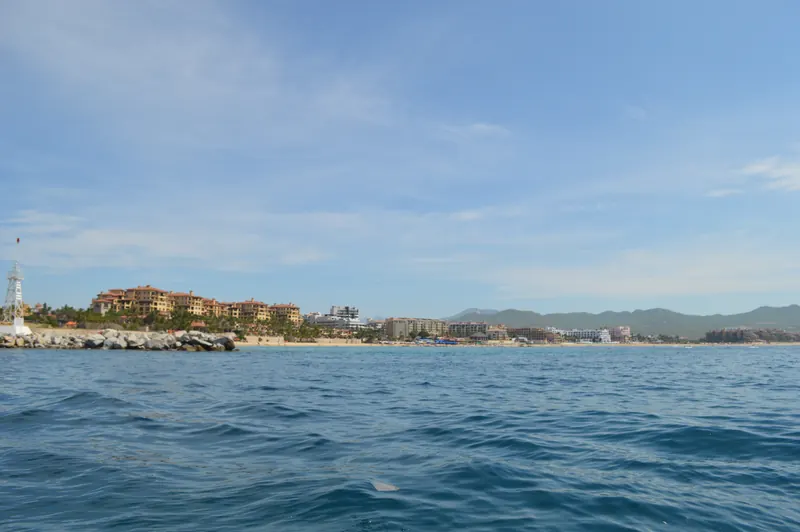
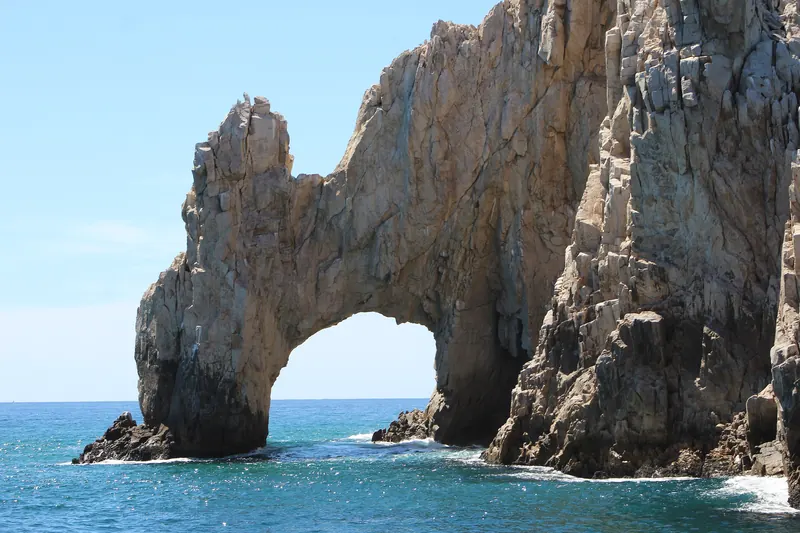
The view that mattered in this story was from a ship: Land's End coming up over the bow after months at sea. You get it within minutes of leaving the dock.
The 2 hour Arch and Land's End route goes from the marina past Pelican Rock to the sea lion colony and the Arch, 1.2 miles (1.9 km) from the marina, then past Lover's Beach and back along Médano Beach. At the Arch the captain idles where the bay ends and the Pacific begins. From there you can look back across the whole anchorage.
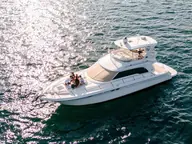
If you are bringing a larger group, the Sea Ray 55 carries up to 15 guests and has a flybridge, air conditioning and cabins. It starts at USD 2,129 (MXN 40,399) for 3 hours. Smaller groups can do the same route for less on other boats in the planner. Prices are per boat, 16% tax included. The customary 15% crew tip is not included.
For the geology of the landmark itself, see the Arch of Cabo San Lucas. For the longer story of the town, see the history of Cabo San Lucas.
Yachts in this guide
Questions people ask
Were there really pirates in Cabo San Lucas?
Yes. English privateers used the cape to ambush Spanish ships. Thomas Cavendish captured the Manila galleon Santa Ana there in November 1587, and Woodes Rogers captured the Nuestra Señora de la Encarnación y Desengaño off the cape at the end of 1709.
What was the Manila galleon trade route?
It was a yearly round trip across the Pacific between Manila, in the Philippines, and Acapulco, in Mexico, that ran from 1565 to 1815. Ships carried Chinese silk, porcelain and spices east, and Mexican silver west.
Why did the Manila galleons pass Cabo San Lucas?
The eastbound ships sailed far north to catch westerly winds, reached the coast of the Californias and then followed it south to Acapulco. Cabo San Lucas is the tip of the peninsula, so every ship on that track had to pass it.
Is there pirate treasure buried in Cabo San Lucas?
No one has documented any. The stories come from the Content, one of Cavendish's two ships, which sailed from the cape with part of the loot in November 1587 and was never seen again. That is a legend, with no find behind it.
What happened to the Santa Ana galleon?
Cavendish's men unloaded what they could carry, put about 190 people ashore with food and some weapons, and set the ship on fire. The survivors used what was left of the burned hull to get away and were in Acapulco by December 7.
Plan your day on the water
Pick a yacht, the hours and the food in the planner. A written reply within 2 hours, 8 AM to 8 PM Cabo time.
Keep reading
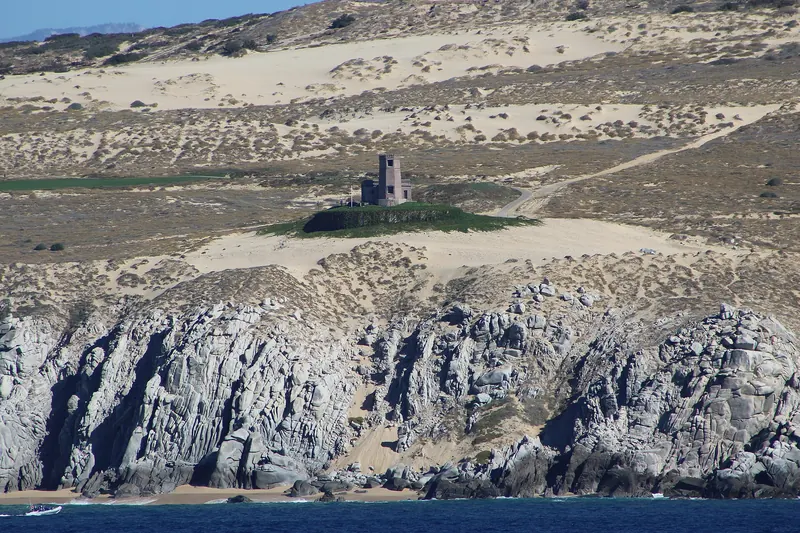 History and cultureCabo San Lucas History: From the Pericú to TodayA dated timeline of Cabo San Lucas: the Pericú, the galleons and privateers, the cannery village, and the highway and airport that built the resort.7 min read
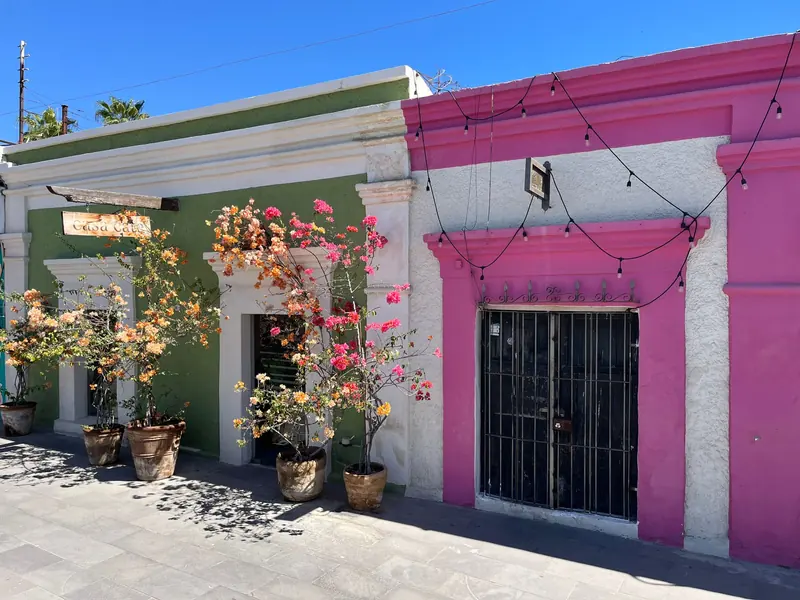 History and cultureSan José del Cabo Mission: History and What to SeeWhen the San José del Cabo mission was founded, why it moved, what happened in 1734, and what the church on Plaza Mijares shows now.7 min read
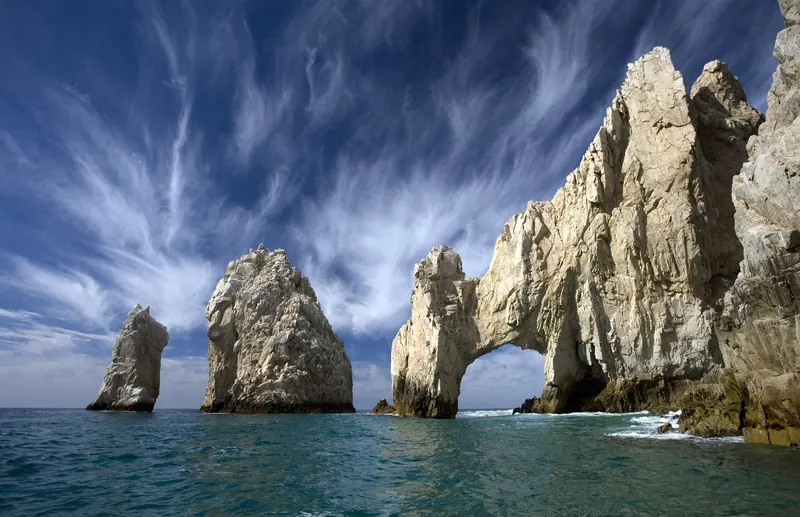 Beaches and snorkelingThe Arch Cabo San Lucas: Did It Collapse? How to See ItThe Arch is still standing. How it formed, why sand sometimes appears under it, and the easiest way to see it from the water.7 min read
 History and cultureCabo San Lucas Name Meaning and 25 Facts About the CapeWhere the name Cabo San Lucas comes from, plus 25 short, checked facts about the Arch, Land's End, the two seas and the town.8 min read