


The history of Cabo San Lucas, from Pericú fishing camps to a resort town
A dated timeline of Cabo San Lucas: the Pericú, the galleons and privateers, the cannery village, and the highway and airport that built the resort.
In this guide
- Cabo San Lucas history at a glance
- Who lived in Cabo San Lucas before the Spanish?
- How did Cabo San Lucas get its name?
- Why did pirates wait at the cape?
- When did the town itself begin?
- The lighthouse and the cannery years
- What turned a fishing village into a resort?
- Cabo San Lucas historical sites you can still see
- Seeing that history from the water
Cabo San Lucas was a Pericú fishing ground for thousands of years, then a landmark for Spanish galleons and the English privateers who hunted them, then a village of a few hundred people around a tuna cannery. The resort town is recent. The paved highway from the U.S. border opened on December 1, 1973, and the airport followed in 1977.
The dates below come from Mexican government and academic sources where we could find them. Where sources disagree, we say so.
Cabo San Lucas history at a glance
| Year | What happened |
|---|---|
| About 10,000 years ago | First people on the cape; the Pericú later call the place Yenekamú |
| 1539 | Francisco de Ulloa, sent by Hernán Cortés, rounds the cape by sea |
| 1541 | By tradition, Francisco de Bolaños names it for Saint Luke |
| 1565 to 1815 | Manila galleons pass the cape on the way to Acapulco |
| 1587 | Thomas Cavendish captures the galleon Santa Ana |
| 1709 | Woodes Rogers captures a second galleon off the cape |
| 1730 | Jesuit mission founded at San José del Cabo |
| 1823 | First land title at Cabo San Lucas, to Cipriano Ceseña |
| 1905 | Cabo Falso lighthouse inaugurated |
| 1927 to 1980 | The tuna cannery years |
| 1956 to 1963 | First fly-in fishing hotels on the corridor and the bay |
| 1973 | Transpeninsular Highway opens; Land's End waters protected |
| 1977 | Los Cabos International Airport opens |
| 1981 | Municipality of Los Cabos created |
| 2005 | Protected waters at Land's End join a UNESCO World Heritage site |
Who lived in Cabo San Lucas before the Spanish?
The Pericú. They lived across the cape region, from Todos Santos around to La Paz, and on the islands of the southern gulf. According to the municipal history of Cabo San Lucas, they called this place Yenekamú.
They were sea people. They fished from wooden rafts with double-bladed paddles, used harpoons and nets, and gathered shellfish along the same shore where the beach clubs are now. Archaeologists from INAH, Mexico's heritage institute, recorded a shell midden at El Médano in 1991. Shell from it has been radiocarbon dated to about 5,600 years ago, and the cape region as a whole has evidence of people going back roughly 10,000 years.
The Pericú did not survive the mission period as a people. We tell that story with more care in our article on the Pericú of Los Cabos.
How did Cabo San Lucas get its name?
"Cabo" means cape. "San Lucas" is Saint Luke. The municipal history says the navigator Francisco de Bolaños named the cape in 1541, on the saint's feast day. Popular retellings add a storm, a waterspout and a statue of the saint in the captain's cabin. Treat those details as legend.
Bolaños was not the first European here. Francisco de Ulloa, sent north by Hernán Cortés, sailed to the head of the gulf in 1539, came back down the coast and rounded the cape into the Pacific. Some local timelines put his first sighting in 1537. The 1539 voyage is the one historians document.
Why did pirates wait at the cape?
From 1565 to 1815, a Spanish ship crossed the Pacific each year from Manila to Acapulco with Chinese silk, porcelain and spices. The eastbound crossing took months. By the time a galleon reached the coast of the Californias, the crew was sick and short of water, and the ship followed the land south until it passed Cabo San Lucas.
That made the cape the obvious place to wait for one. Thomas Cavendish did it in 1587 and took the Santa Ana, which was sailing without cannon to leave room for cargo. Woodes Rogers did it again in the last days of 1709 and took the Nuestra Señora de la Encarnación y Desengaño. The galleons also stopped for fresh water at the estuary of San José del Cabo, which sailors called Aguada Segura. Local histories give that as one reason the Jesuits founded a mission there in 1730.
The full account, with what is documented and what is treasure legend, is in pirates and the Manila galleon.
When did the town itself begin?
In the 1820s, which is later than most visitors guess. The mission and the Spanish garrison were at San José, 20 miles east. Cabo San Lucas had a good anchorage and almost nobody living on it.
The municipal history records the first property title at Cabo San Lucas in 1823, to Cipriano Ceseña. English-language accounts usually credit an English sailor, Thomas Ritchie, who settled here in the 1820s and stayed for about fifty years. The two versions disagree on who counts as the founder, and one source dates Ceseña's arrival to 1788. What both agree on is the size of the place. A shipwrecked Japanese sailor named Hatsutaro, who landed in May 1842, described two houses and about 20 inhabitants.
During the war between Mexico and the United States, the fighting on the cape happened at San José del Cabo, in November 1847 and again in January and February 1848.
The lighthouse and the cannery years
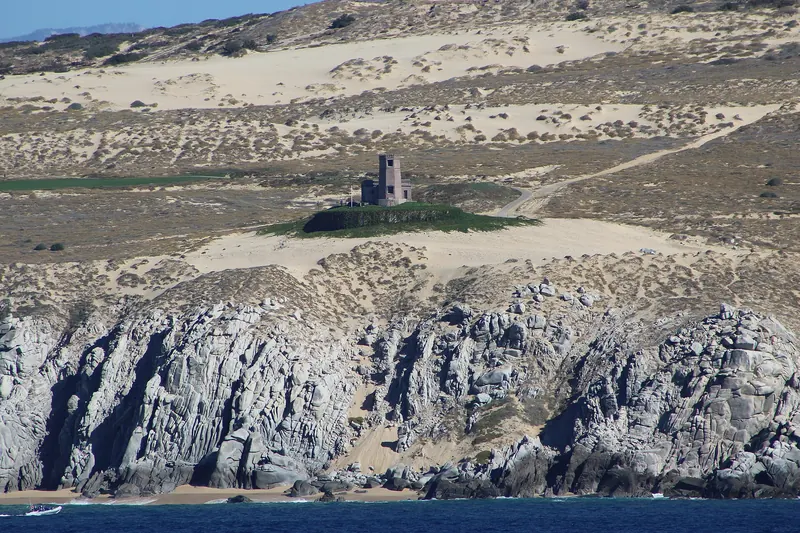
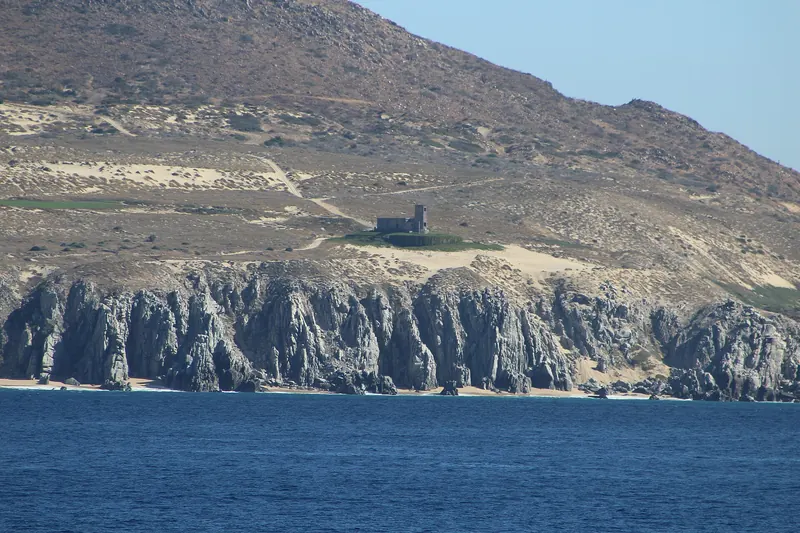
The first big structure on the cape was built for ships. The Cabo Falso lighthouse, on the Pacific dunes west of town, was inaugurated in 1905. Its story is in our Cabo Falso lighthouse article.
Then came tuna. An American company built a floating platform for tuna in the bay in 1917 and set up on shore in the 1920s. Most accounts give 1927 for the founding of Compañía de Productos Marinos and 1929 for the plant on land, though the municipal history says 1925, and one local chronology puts the building at 1932. The cannery ran until 1980. For half a century it was the town's employer, and the workers' houses stood on the flat where the marina is today.
What turned a fishing village into a resort?
Sportfishing came first. In 1951 Cabo San Lucas had about 300 residents. The first hotels were small lodges that guests reached by private plane or boat: the Palmilla on the corridor in 1956, the Hotel Cabo San Lucas in 1961 and the Hacienda on the bay in 1963.
Then four things happened in a few years:
- On November 29, 1973, a federal decree made the waters around Land's End an underwater refuge. It is now the Cabo San Lucas Flora and Fauna Protection Area, 3,996 hectares, about 95% of it sea.
- On December 1, 1973, Mexico inaugurated the Transpeninsular Highway, about 1,050 miles of pavement from the border to the cape.
- Between 1973 and 1975, by local accounts, the inner harbor was dredged out of a dry mudflat that had held the cannery houses and a landing strip.
- In 1977 the international airport opened near San José del Cabo.
Baja California Sur became a state in 1974, and the federal tourism fund FONATUR started its Los Cabos project in 1976. The municipality of Los Cabos, with its seat in San José del Cabo, dates from 1981.
The 1990 census counted 16,059 people in Cabo San Lucas. The 2020 census counted 202,694.
Cabo San Lucas historical sites you can still see
There is no old quarter in Cabo San Lucas, because there was no old town. What you can see is mostly coast.
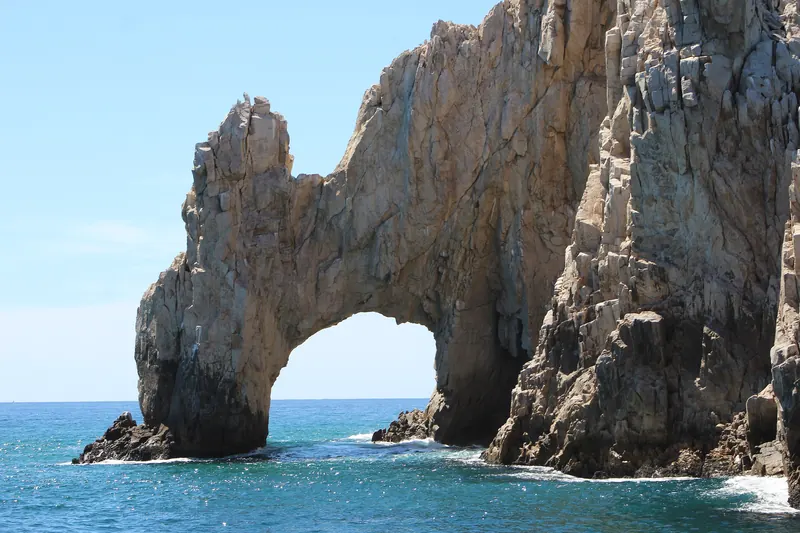
- Land's End and the Arch, the tip of the peninsula that every galleon bound for Acapulco had to round.
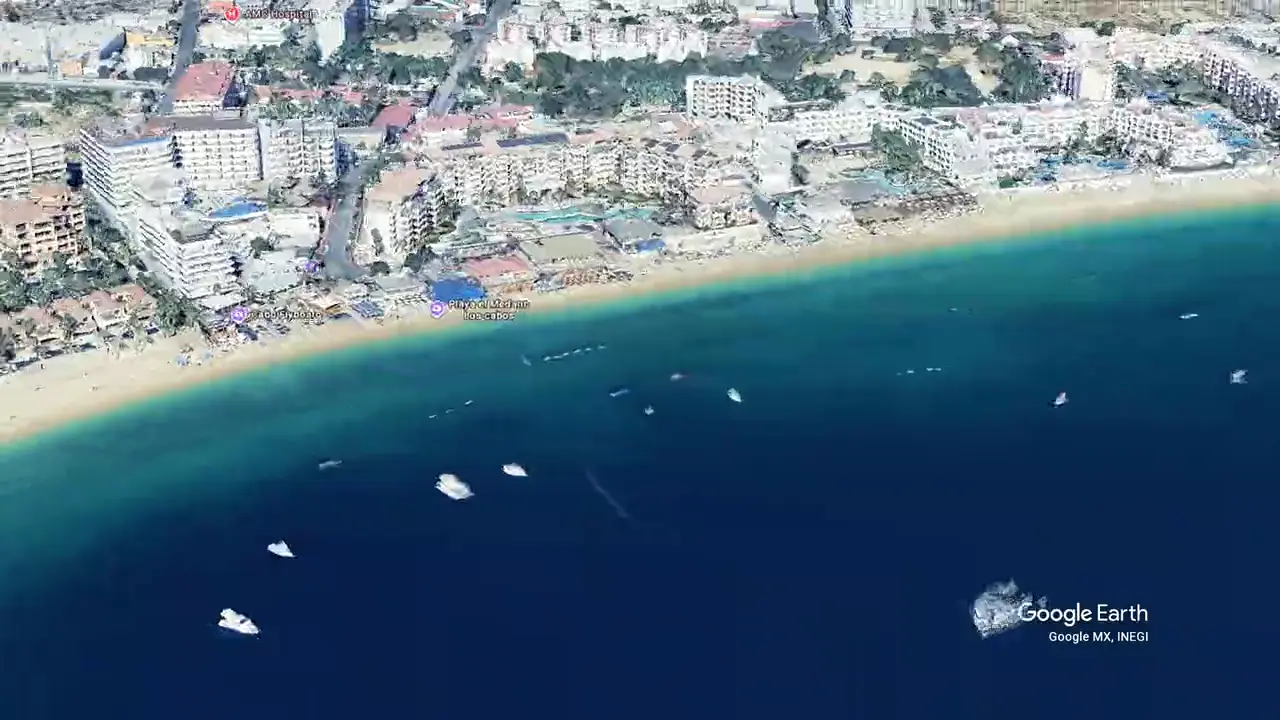
- The bay itself, the anchorage that brought ships here long before there was a town.
- The 1905 lighthouse at Cabo Falso, visible from the Pacific side.
- Marina Cabo San Lucas, the man-made harbor of the 1970s.
- In San José del Cabo, the plaza and church of the 1730 mission, covered in the mission of San José del Cabo.
Seeing that history from the water
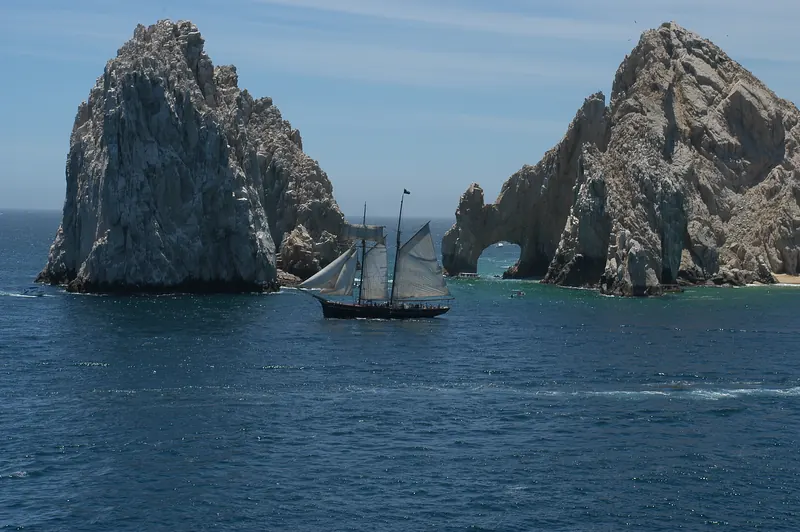
Most of this history happened on the water, and the coastline has changed less than the town. From a boat in the bay you see Land's End much as crews did in 1587, with the Arch at the end of the point and the Pacific behind it.
The 2 hour Arch and Land's End route covers 4.7 miles round trip and passes Pelican Rock, the sea lions, the Arch and Lover's Beach before coming back along Médano Beach. The 2 hour Pacific sunset route goes around the point to Cabo Falso and the lighthouse, 12 miles round trip.
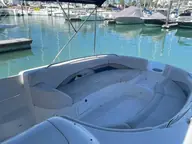
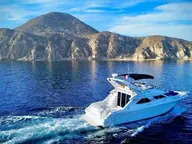
For a small group, the Chaparral 28 takes up to 10 guests and starts at USD 519 (MXN 9,799) for 2 hours. The Sea Ray 40 has a flybridge, which gives you a higher view of the point, and starts at USD 879 (MXN 16,799) for 2 hours with up to 12 guests. Prices are per boat with the 16% tax included. The customary 15% crew tip is not included.
Every charter is private and boards at Marina Cabo San Lucas. You can check dates and routes in the planner.
Yachts in this guide
Questions people ask
How old is Cabo San Lucas?
People have lived on the cape for roughly 10,000 years, and a shell midden behind Médano Beach has been radiocarbon dated to about 5,600 years. The modern town is much younger: the first land title was granted in 1823, and in 1842 a visitor counted two houses and about 20 people.
What is Cabo San Lucas known for historically?
For being the landmark where Manila galleons reached the end of the Baja peninsula on their way to Acapulco, and where English privateers waited for them. Thomas Cavendish took the galleon Santa Ana off the cape in November 1587.
When did Cabo San Lucas become a tourist destination?
The first fly-in fishing hotels opened between 1956 and 1963. Mass tourism started after the Transpeninsular Highway opened on December 1, 1973, the harbor was dredged in the mid 1970s and Los Cabos International Airport opened in 1977.
Are there historical sites to visit in Cabo San Lucas?
A few. The Arch and Land's End are the tip of the peninsula that the galleons had to round, the Cabo Falso lighthouse dates from 1905, and the marina sits where the cannery village and its landing strip used to be. The oldest church in the area is in San José del Cabo, on a mission founded in 1730.
Plan your day on the water
Pick a yacht, the hours and the food in the planner. A written reply within 2 hours, 8 AM to 8 PM Cabo time.
Keep reading
 History and cultureCabo Pirates and the Manila Galleon: The Real StoryWhy the Manila galleons passed Cabo San Lucas, how Cavendish and Rogers captured two of them, and which pirate stories are only legend.7 min read
 History and cultureThe Pericú People: Who Lived in Cabo Before the SpanishWho the Pericú were, how they lived from the sea, what happened after the missions arrived in the 1720s, and where their history is kept.7 min readBeaches and snorkelingCabo Falso Lighthouse: History and How to See ItThe 1905 Faro Viejo on the Pacific dunes: its history, why land access is complicated, and how a sunset boat route gets you there.6 min readHistory and cultureHistory of Cabo Hotels: From Palmilla to the Resort BoomHow Los Cabos went from a fly-in hotel for 15 guests to a coast of resorts, year by year, with the founders and the dates behind each one.7 min read