


What Cabo San Lucas means, and 25 facts about the cape, the Arch and the town
Where the name Cabo San Lucas comes from, plus 25 short, checked facts about the Arch, Land's End, the two seas and the town.
In this guide
Cabo San Lucas means "Cape Saint Luke." The Spanish navigator Francisco de Bolaños gave it the name on October 18, 1541, the feast day of Saint Luke, after sheltering in the bay during a storm. The cape is the southern tip of the Baja California peninsula, which runs about 775 miles (1,247 km) from the US border, and it's the place where the Pacific Ocean meets the Sea of Cortez.
Here are 25 facts about the name, the Arch and the town.
What does the name Cabo San Lucas mean?
"Cabo" is Spanish for cape. "San Lucas" is Saint Luke the Evangelist. Put together, the name describes the place: the cape of Saint Luke.
The naming story comes from the Los Cabos municipal tourism office. Bolaños reached the bay in 1541, rode out a storm there and named the cape for the saint whose day it was. The name was on maps soon after. It appears on charts from 1545 and 1562.
The people who already lived here had their own name. The Pericú called the place Yenekamú, also spelled Yenecamú.
"Los Cabos" means "the capes." It's the name of the municipality that includes Cabo San Lucas and San José del Cabo, and it's why you'll hear the whole area called simply "Cabo."
What is Cabo San Lucas famous for?
| Known for | The fact | Where to see it |
|---|---|---|
| The Arch | A granite arch at the tip of the peninsula | 1.2 mi from the marina, by boat |
| Two seas | The Pacific meets the Sea of Cortez here | Around the point at Land's End |
| Lover's Beach | A swimming beach reached by boat | 1 mi from the marina |
| Whales | Humpbacks arrive from November | On the water, in winter |
| Marlin | A tournament that paid USD 6.8 million in 2024 | At the marina docks |
Facts about the name and the map
-
The name means Cape Saint Luke. Cabo is cape, San Lucas is Saint Luke.
-
It was named on the saint's own day. Francisco de Bolaños named it on October 18, 1541, which is the feast of Saint Luke in the Catholic calendar.
-
Its older name is Yenekamú. That's what the Pericú, the people who lived at the cape before the Spanish arrived, called it.
-
It sits at the end of a 775 mile peninsula. Baja California is 1,247 km long from Mexicali to Cabo San Lucas, and between 40 and 320 km (25 and 200 miles) wide.
-
It's in the tropics. The Tropic of Cancer crosses the peninsula north of Cabo, and a monument marks the line on Highway 1 near the town of Santiago.
-
"Los Cabos" is two towns. Cabo San Lucas and San José del Cabo are joined by a coastal corridor about 20 miles (32 km) long.
-
Cabo never changes its clocks. It's on Mountain Standard Time, UTC-7, all year. Mexico ended daylight saving time in most of the country on October 30, 2022. That puts Cabo on Denver's time in winter and Los Angeles's time in summer.
Facts about the Arch and Land's End
-
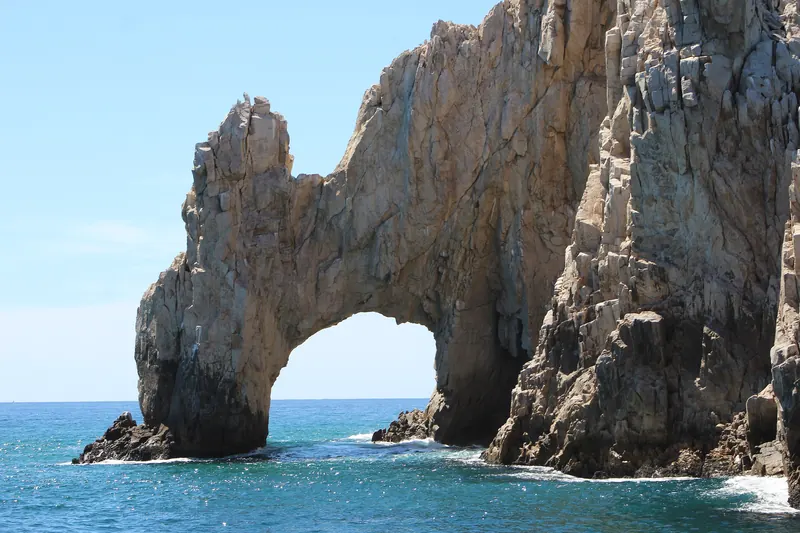
The Arch is granite. The bedrock of Los Cabos formed about 115 million years ago, in the Cretaceous, and erosion carved the opening. The Arch is known locally as El Arco, and the point it stands on is Land's End.
-
Two bodies of water meet at it. The Pacific Ocean is on one side and the Sea of Cortez, also called the Gulf of California, is on the other.
-
On a normal day you can't walk to it. A strip of sand forms under the Arch every four to five years, and the municipal beach authority warns that walking on it is extremely dangerous. It came back in August 2026, and Civil Protection closed the area because of heavy surf.
-
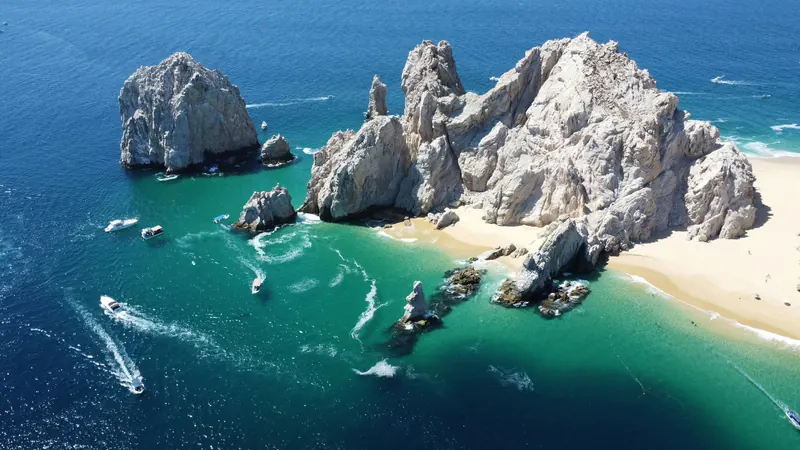
Two beaches sit back to back beside it. Lover's Beach faces the calm Sea of Cortez and is where people swim. Divorce Beach faces the open Pacific and isn't safe for swimming.
-
Divorce Beach is the bigger one. It measures about 7,035 m² (75,700 sq ft) against 2,306 m² (24,800 sq ft) for Lover's Beach, according to CONANP's draft management program.
-
Nobody knows who named those beaches. Locals used to call Lover's Beach Playa de Doña Chepa. The romantic name and the joke about divorce have no documented origin, whatever you hear on the boat.
-
There are waterfalls of sand under the water. In 1959 a storm stripped about 30 inches (76 cm) of sand off Lover's Beach, and a diver saw sand pouring over rocks at about 110 ft (34 m) deep. The Sand Falls run for about 800 m (half a mile) along the coast, and Jacques Cousteau later filmed them.
-
The falls are why the area is protected. The waters around Land's End became an underwater refuge on November 29, 1973. In 2000 the zone became the Cabo San Lucas Flora and Fauna Protection Area: 3,996 hectares (about 9,870 acres), roughly 95% of it sea.
-
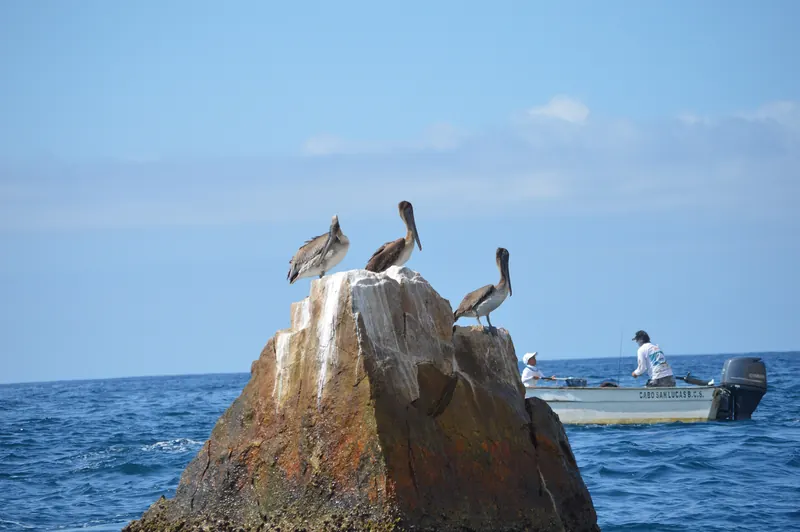
Pelican Rock is named for its pelicans. Brown pelicans perch on Pelican Rock, a rocky point inside the bay that is the first snorkel stop on most boat routes.
-
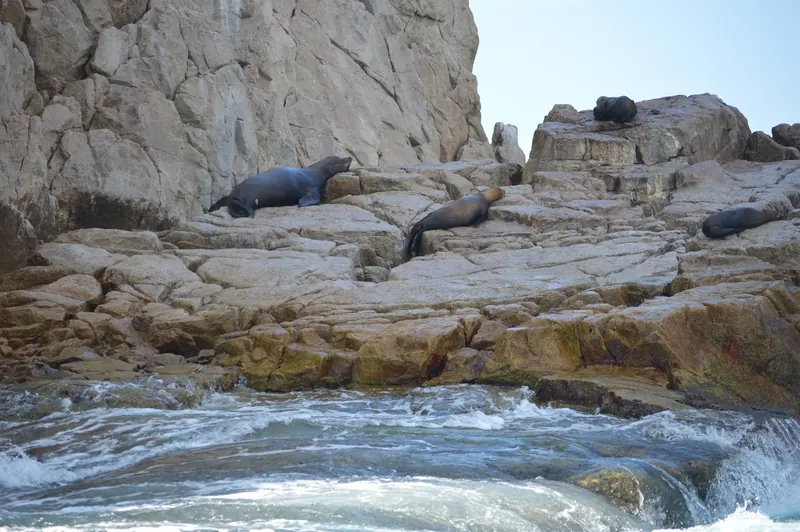
Sea lions are the year-round residents. California sea lions rest on the rocks next to the Arch, and they're the only marine mammal that stays in the area all year. CONANP asks boats and swimmers to keep at least 20 m (66 ft) away.
-
Humpback whales are winter visitors. They start arriving in November. The official whale-watching season, set each year by SEMARNAT, ran from December 15 to April 30 in 2025 to 2026.
Facts about the town and its history
-
An English privateer took a treasure ship here. On November 4, 1587, Thomas Cavendish captured the Manila galleon Santa Ana off Cabo San Lucas, took its cargo and set the ship on fire. Our article on pirates and the Manila galleon tells the full story.
-
In 1842 it was two houses. A castaway who landed that year counted two houses and about 20 people. Cipriano Ceseña is credited as the founder of the settlement, in 1788.
-
Tuna came before tourists. An American company set up a tuna operation here in 1917, and fishing was the town's business long before hotels were.
-
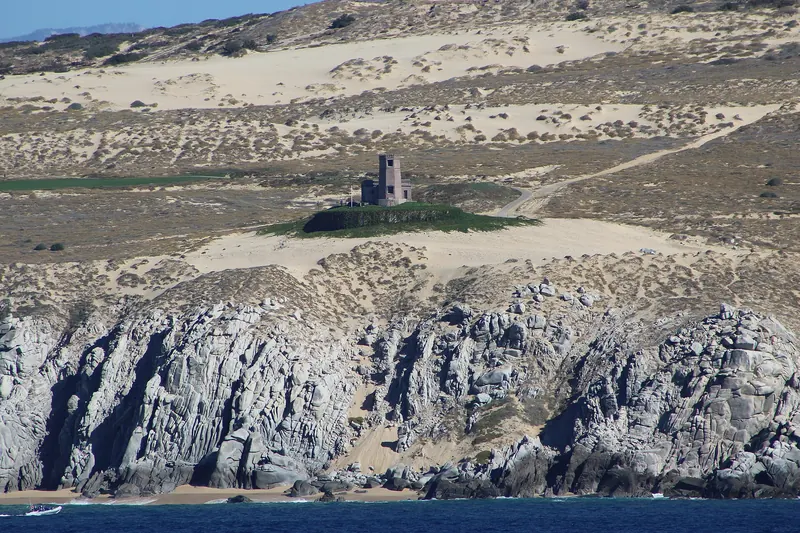
A lighthouse has stood nearby since 1905. The old Cabo Falso lighthouse is on the Pacific dunes, 3.6 miles (5.7 km) from the marina, at the westernmost point of the cape.
-
The road only arrived in 1973. The Transpeninsular Highway was inaugurated on December 1, 1973, and Los Cabos International Airport opened in 1977.
-
The village is now a city. Cabo San Lucas had 202,694 residents at the 2020 census. In 2025 the port received 285 cruise ship calls with 1,057,758 passengers, and Los Cabos as a whole had a record 3.77 million tourists.
-
It hosts one of the richest fishing tournaments anywhere. Bisbee's Black & Blue started with 6 boats and a USD 10,000 purse. In 2024 it drew 174 teams and more than 1,200 anglers and paid out USD 6,847,200. The marina they fish from has 380 slips and takes boats up to 375 ft (114 m) long.
If you want the longer version of the town's past, read our history of Cabo San Lucas. For the water itself, see our Sea of Cortez facts.
Quick answers people look up
| Question | Answer |
|---|---|
| What does the name mean? | Cape Saint Luke |
| Who named it, and when? | Francisco de Bolaños, October 18, 1541 |
| What was it called before? | Yenekamú, by the Pericú |
| What rock is the Arch? | Granite |
| Which seas meet there? | The Pacific and the Sea of Cortez |
| What time zone is it? | Mountain Standard Time all year |
| How far is the Arch from the marina? | 1.2 miles (1.9 km) |
| Can you walk to the Arch? | Not on a normal day |
How many of these can you see in 2 hours?
Most of the list is within 1.3 miles of the marina. Our 2 hour Arch & Land's End route passes Pelican Rock, the sea lion colony, the Arch, Lover's Beach and Divorce Beach, then comes back along Médano Beach. It's 4.7 miles (7.6 km) round trip.
On that one loop you get the granite of fact 8, the two seas of fact 9, both beaches, the pelicans and the sea lions. From November to April you may add whales. The captain slows down at Land's End so you can photograph the Arch from the bay side and from the Pacific side, and there's time for a swim or a snorkel on the calm side.
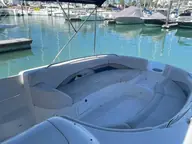
The simplest boat for it is the Chaparral 28, a 28 ft sport boat for up to 10 guests. Two hours cost USD 519 (MXN 9,799), and three hours cost USD 709 (MXN 13,599). It comes with snorkel gear, a lily pad floating mat, a cooler and a Bluetooth sound system. Split ten ways, 2 hours is about USD 52 each.
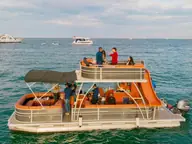
For a bigger group, the Sea Ray 36 takes up to 12 guests from USD 659 (MXN 12,599) for 2 hours, and the Pontoon 38 takes up to 18 from USD 869 (MXN 16,599).
Every price is per boat for your whole group, with the 16% tax included. The customary 15% crew tip isn't included. Our guide to the Arch covers the best time of day for photos.
To pick a date, open the planner and send your group size and the time you'd like to leave. We reply in writing within 2 hours, between 8 AM and 8 PM Cabo time, and you pay through a secure Stripe link once the date is confirmed.
Yachts in this guide
Questions people ask
What does Cabo San Lucas mean?
It means Cape Saint Luke. Cabo is Spanish for cape, and San Lucas is Saint Luke the Evangelist, whose feast day is October 18.
Who named Cabo San Lucas?
The Spanish navigator Francisco de Bolaños, in 1541. According to the Los Cabos tourism office, he took shelter in the bay during a storm on Saint Luke's feast day and named the cape for the saint.
What is Cabo San Lucas famous for?
The Arch at Land's End, where the Pacific meets the Sea of Cortez. It is also known for marlin fishing, winter whales, Lover's Beach and a marina with 380 slips.
How long is the Baja California peninsula?
About 1,247 km (775 miles), from Mexicali in the north to Cabo San Lucas at the southern tip. It is between 40 and 320 km (25 and 200 miles) wide.
Does Cabo San Lucas change its clocks?
No. Cabo is on Mountain Standard Time, UTC-7, all year. Mexico ended daylight saving time in most of the country on October 30, 2022.
Plan your day on the water
Pick a yacht, the hours and the food in the planner. A written reply within 2 hours, 8 AM to 8 PM Cabo time.
Keep reading
History and cultureCabo San Lucas History: From the Pericú to TodayA dated timeline of Cabo San Lucas: the Pericú, the galleons and privateers, the cannery village, and the highway and airport that built the resort.7 min read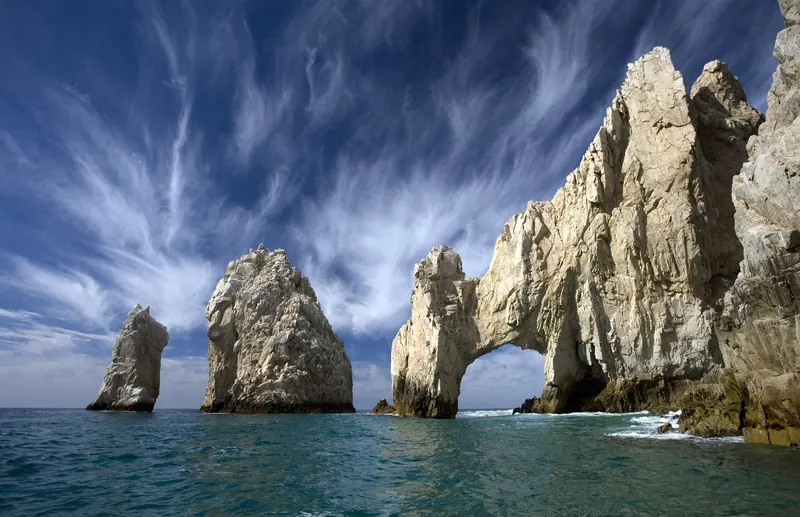 Beaches and snorkelingThe Arch Cabo San Lucas: Did It Collapse? How to See ItThe Arch is still standing. How it formed, why sand sometimes appears under it, and the easiest way to see it from the water.7 min read
 History and cultureSea of Cortez Facts: Name, History and Where It BeginsThe Sea of Cortez and Gulf of California are one sea: its two names, the Cousteau quote, Steinbeck's voyage and where it ends.8 min read
 History and cultureHistory of Cabo Hotels: From Palmilla to the Resort BoomHow Los Cabos went from a fly-in hotel for 15 guests to a coast of resorts, year by year, with the founders and the dates behind each one.7 min read