


The mission of San José del Cabo: its history, the 1734 revolt and the church on the plaza
When the San José del Cabo mission was founded, why it moved, what happened in 1734, and what the church on Plaza Mijares shows now.
In this guide
The San José del Cabo mission was founded on April 8, 1730, by the Jesuit Nicolás Tamaral, at the freshwater estuary where San José del Cabo stands today. It was destroyed in the Pericú revolt of 1734, rebuilt, moved several times and closed as a mission around 1840. The church you see on Plaza Mijares was completed in 1940, with a tile mural of Tamaral's death above the door.
Its full name is Misión Estero de las Palmas de San José del Cabo Añuití. The estero is the palm-lined estuary. Añuití is what the Pericú called the place.
San José del Cabo mission history on a timeline
| Year | What happened |
|---|---|
| 1730 | Founded April 8 by Nicolás Tamaral; soon moved inland to Añuití |
| 1734 | Pericú revolt; Tamaral killed October 3; mission destroyed |
| 1736 to 1737 | Spanish garrison set up; mission re-established near the estuary |
| 1748 | Reduced to a visita, an outstation of the Santiago mission |
| 1753 | Moved to its last site, just north of the estuary |
| 1768 | Jesuits expelled from Spanish lands; Franciscans take over |
| 1773 | Dominicans take over |
| 1793 | Floods destroy the church |
| 1799 | New adobe church completed |
| About 1840 | Mission ends and becomes a parish church |
| 1847 to 1848 | U.S. forces hold the town during the war with Mexico |
| 1918 | Hurricane wrecks the old church |
| 1940 | Present church completed |
Who founded the mission, and why here?
In March 1730 two Jesuits sailed south from Loreto, the mother mission of the Californias: José de Echeverría, the order's visitor, and Nicolás Tamaral, the priest chosen to stay. They founded the mission in April. The state tourism ministry of Baja California Sur credits both men. Most histories give the date as April 8 and name Tamaral as founder.
It was the southernmost of the Jesuit missions, about 50 kilometers south of the Santiago mission. The site had what the rest of the cape lacks: a river that reaches the sea and a lagoon of fresh water behind the beach.
That water had been known to sailors for a long time. Galleons returning from Manila stopped here to fill their casks, and they called the anchorage Aguada Segura or the bay of San Bernabé. Local histories say giving those ships a supported port was one purpose of the mission. The galleon story, including the English privateers who waited for them, is in pirates and the Manila galleon.
The first chapel was a hut of palm leaves beside the estuary. Mosquitoes and poor soil pushed the missionaries inland within months, to the place called Añuití. Tamaral reported hundreds of baptisms in the first year. One account has him writing of 823 by December 1730, and the state tourism ministry gives 1,034 for the year.
What happened in the revolt of 1734?
The people Tamaral came to convert were the Pericú, who had lived on the cape for thousands of years. The missions asked them to settle, to give up having several wives and to accept the priests' discipline. They also brought diseases that the Pericú had never met.
In early October 1734 the Pericú rose. At Santiago they killed the missionary Lorenzo Carranco. On October 3 they killed Tamaral at San José del Cabo and destroyed the mission. The uprising reached Todos Santos and La Paz, and all four southern missions were destroyed.
The Spanish needed about two years to retake the cape. In 1736 they decided to station a permanent garrison at San José, the Presidio of the South, and the mission was re-established close to the estuary in early 1737.
The Jesuit accounts of the revolt are the only detailed ones, and they describe the Pericú as the aggressors. The Pericú paid far more for it. Fighting and epidemics over the next fifteen years left very few of them. We tell their side, as far as the sources allow, in the Pericú people of Los Cabos.
Why did the mission keep moving?
Water, disease and floods. Accounts of the moves differ in their details, but the outline is this:
- 1730: founded by the estuary, then moved inland to Añuití.
- 1735 to 1737: re-established nearer the coast after the revolt.
- 1748: with most of its people dead from epidemics, it was downgraded to a visita, an outstation served from Santiago.
- 1753: moved for the last time, to a site just north of the estuary. That is where the plaza is.
The Jesuits were expelled from all Spanish territory in 1768. Franciscans served the mission for five years and Dominicans after 1773. A fever in May 1769 killed most of the remaining native population and the Franciscan priest, Juan Morán. In 1795 the Dominicans moved the surviving people of the Santiago mission here.
Floods destroyed the church in 1793. A large adobe church replaced it in 1799. Mission work ended about 1840, when there was no longer a native community to serve, and the building became the town's parish church.
The mission church in the 1800s
The town saw fighting twice in that century.
In February 1822, ships of Lord Cochrane's Chilean navy appeared off San José. The state's account says the attack by the Independencia on February 17 was driven off. Other histories say the town was sacked. We have not found a source that settles it.
During the war between Mexico and the United States, a small U.S. Navy and Marine garrison held San José and occupied the mission church. Mexican militia attacked on November 20 and 21, 1847, and besieged the garrison from January 22 to February 14, 1848. The plaza and the main boulevard carry the name of José Antonio Mijares, the Spanish-born Mexican lieutenant who was fatally wounded leading the November assault.
What do you see at the mission today?
A working parish church on Plaza Mijares, in the historic center. The old adobe church was badly damaged by a hurricane in 1918. Some accounts say it was destroyed. The present building, with its twin bell towers, was completed in 1940. The longer chronology of the mission, site by site, is in David Kier's history of San José del Cabo Añuití.
Look up before you go in. Above the main door is a tile mural of the killing of Nicolás Tamaral by Pericú men in 1734. It shows the event as the church remembers it.
Nothing of the Jesuit buildings stands. What is original is the location. The mission's last move, in 1753, was to a site just north of the estuary, and the plaza is a short walk from that water.
Practical notes:
- The church holds services, so dress and behave as you would in any church in use.
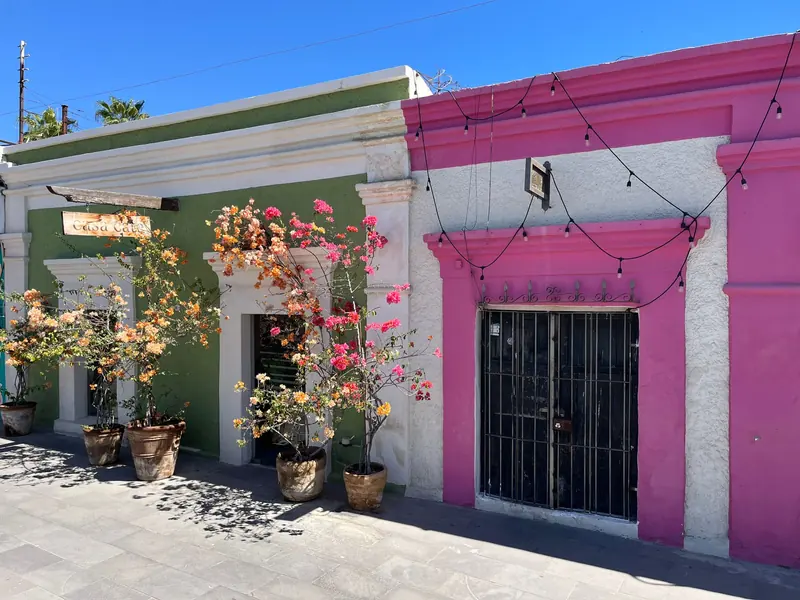
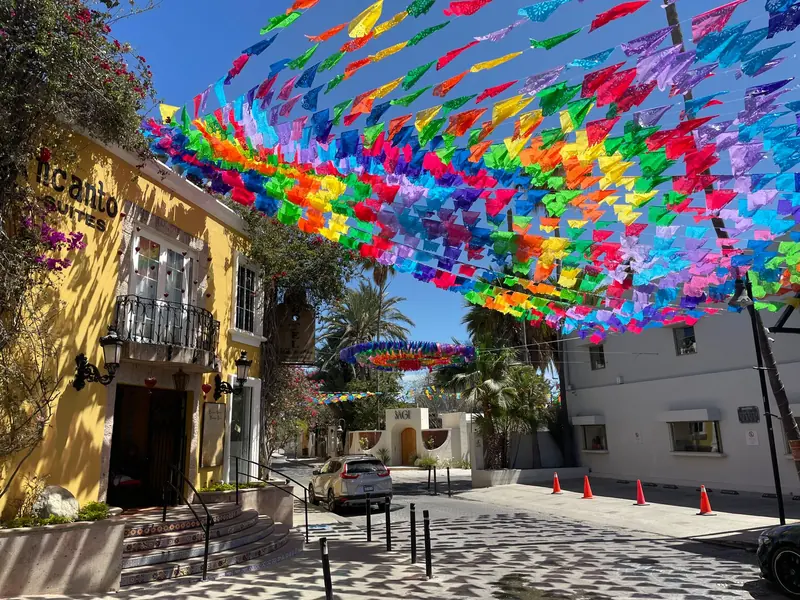
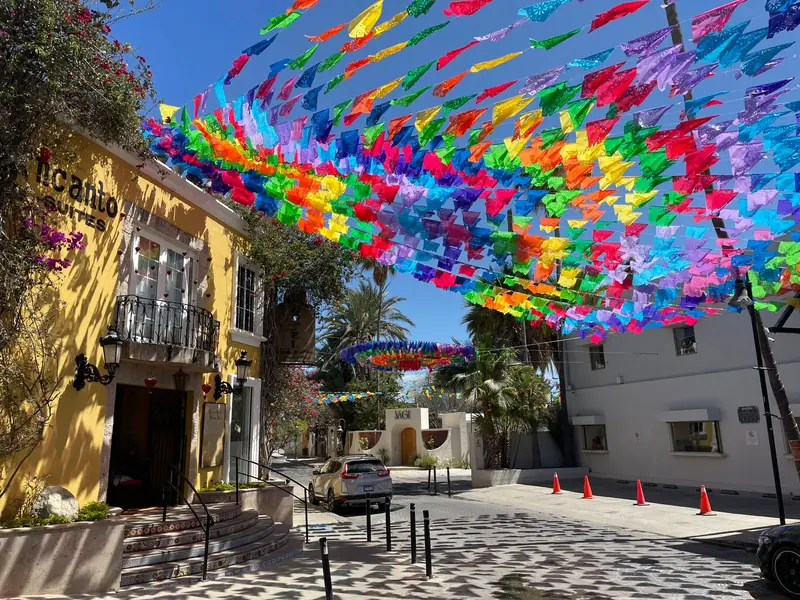
- Plaza Mijares and the streets behind it are the gallery district. On Thursdays from November to June the Art Walk runs from 5 to 9 PM. Details are in our Art Walk in San José article.
- The estuary trail starts a short walk from the plaza. See things to do in San José del Cabo.
Pairing the mission with a day on the water
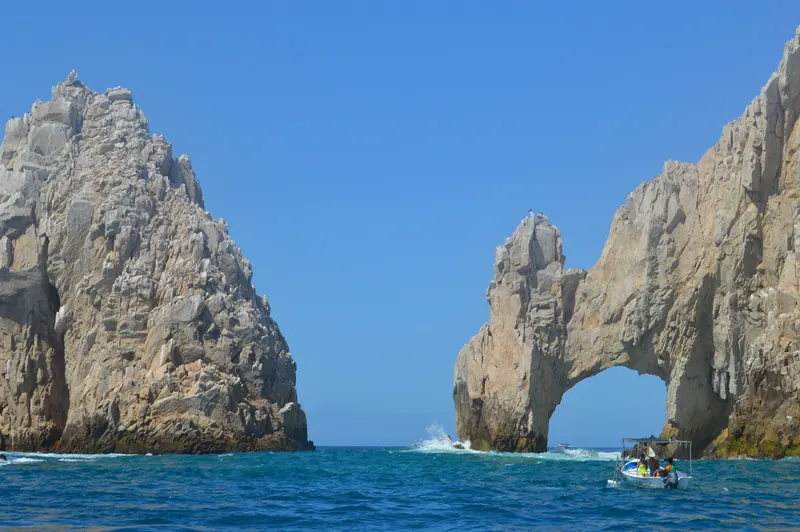
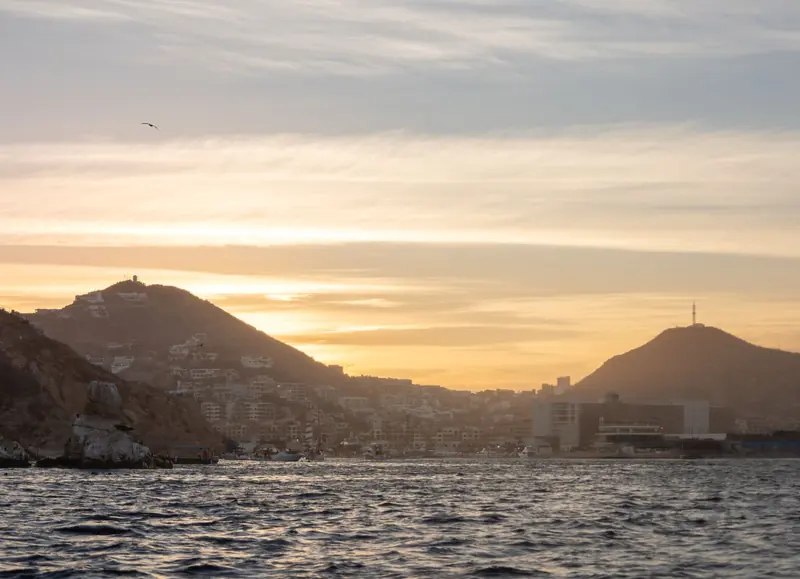
San José's history came from the sea: the galleons stopped for its water and the Jesuits arrived by boat. The easiest way to see that coast from the water today is from Cabo San Lucas, because every private charter we book boards at the marina there, about 20 miles and roughly 30 minutes from the plaza.
A Thursday works well if your trip falls between November and June. Take a morning boat, drive to San José in the afternoon, see the church before sunset and stay for the Art Walk.
For the boat, the full-day route of 5 to 8 hours runs up the corridor toward San José, past the Arch and on to Santa María Bay and Chileno Bay, 7.9 miles (13 km) from the marina, with time to snorkel each cove and lunch at anchor. It covers 18.5 miles round trip. On the Sea Ray 40, for up to 12 guests, 5 hours is USD 1,769 (MXN 33,699) per boat with the 16% tax included. The customary 15% crew tip is not included.
Shorter on time? The 2 hour route to the Arch and Land's End leaves you most of the day for San José. Routes, boats and dates are in the planner.
Yachts in this guide
Questions people ask
When was the San José del Cabo mission founded?
On April 8, 1730, by the Jesuit missionary Nicolás Tamaral, who came south from Loreto with the Jesuit visitor José de Echeverría. It was the southernmost Jesuit mission on the Baja California peninsula.
Is the church in San José del Cabo the original mission?
No. The mission moved several times and its buildings were lost to floods in 1793 and a hurricane in 1918. The church on Plaza Mijares today dates from 1940 and stands on the mission's last site.
What does the mosaic on the San José del Cabo church show?
The tile mural above the main door shows the death of the founder, Nicolás Tamaral, who was killed by Pericú people during the revolt on October 3, 1734.
What does Añuití mean in the mission's name?
Añuití was the Pericú name for the place by the estuary where the mission settled. The sources we found record it as a place name and do not give a translation.
How far is the San José del Cabo mission from Cabo San Lucas?
About 20 miles east along the tourist corridor, roughly a 30 minute drive. The church is on Plaza Mijares in the historic center of San José del Cabo.
Plan your day on the water
Pick a yacht, the hours and the food in the planner. A written reply within 2 hours, 8 AM to 8 PM Cabo time.
Keep reading
 History and cultureThe Pericú People: Who Lived in Cabo Before the SpanishWho the Pericú were, how they lived from the sea, what happened after the missions arrived in the 1720s, and where their history is kept.7 min read
 Things to doThings to Do in San José del Cabo, Day and NightThe plaza and mission church, the Thursday Art Walk, the estuary trail and the swimmable beaches, plus how to fit in a boat day.7 min read
 Things to doCabo Art Walk: Thursdays in San José del CaboWhen the San José del Cabo Art Walk runs, where to park, how long to stay, and how to fit in a boat trip.8 min read
 EventsCabo Events in December 2026: Dates and CalendarWhat's on in Los Cabos in December 2026: Sabor a Cabo, the film festival, a sea-to-sea trail race and the holiday events not announced yet.7 min read